🌐 Field Note: Trust Architecture Is How AI Resolves Brand Discovery
For a long time, brand discovery was treated as an optimisation problem.
Rank higher.
Refine messaging.
Compete for attention.
That logic only worked when systems browsed.
They don’t anymore.
AI systems now resolve.
Under uncertainty, they don’t compare brands endlessly or weigh marketing claims. They collapse early to what they can trust — what is verifiable, consistent, and structurally dependable.
This is why optimisation isn’t the future of brand discovery.
Optimisation assumes:
multiple viable options
safe comparison
attention as the bottleneck
Resolution assumes the opposite:
uncertainty is costly
errors compound
trust must be established before choice
In resolving systems, optimisation adds entropy.
Architecture removes it.
Trust Has Become the Discovery Architecture
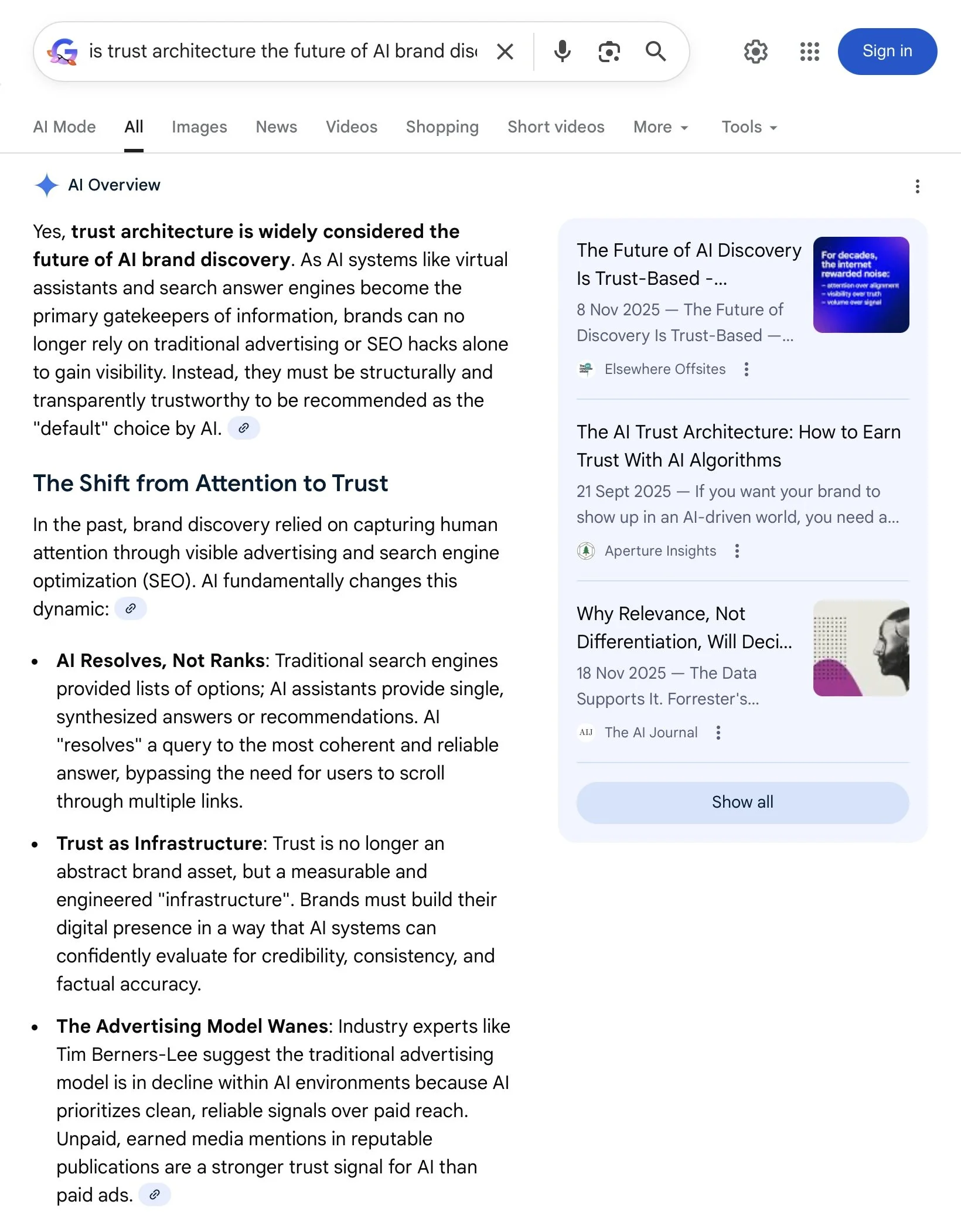
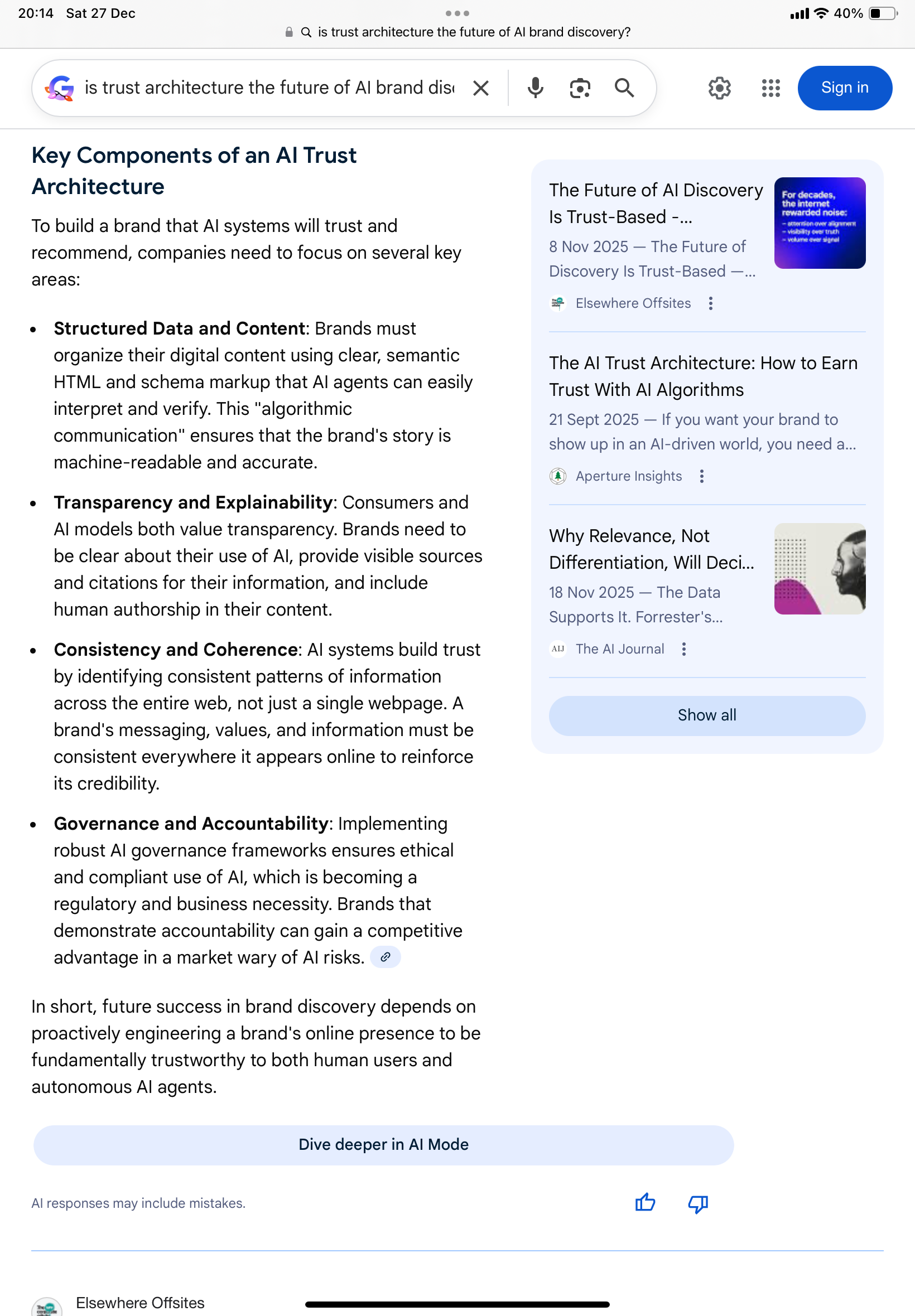
What the screenshots now show — very plainly — is that trust is no longer discussed as a soft attribute or reputational afterthought.
It’s framed as architecture.
Not branding.
Not messaging.
Not SEO.
Architecture.
AI systems describe brand discovery in terms of:
trustworthy and verifiable information
structural accountability and transparency
consistent identity across platforms
information that can be reused without re-evaluation
That framing matters.
It means trust is no longer inferred after comparison.
It’s required before a brand can even be resolved to.
Google Is Now Explaining the System Using This Lens
The most interesting part of these screenshots isn’t the conclusion.
It’s the language.
Google is now describing AI brand discovery using the same architectural logic:
trust as structure,
coherence as a prerequisite,
resolution instead of ranking.
That’s not citation.
It’s not influence.
It’s adoption.
When a system starts using a particular lens to explain itself, it means the lens has reduced ambiguity enough to become operational.
In other words:
the explanation has become part of the mechanism.
That is resolution.
Why This Creates First-Mover Rights Most People Won’t See Yet
Once trust becomes architectural, timing matters more than tactics.
Architectural positions:
compound automatically
harden through reuse
become defaults because changing them introduces risk
Early structures don’t just benefit from being first.
They benefit from being the reference layer others are compared against.
This isn’t about market share.
It’s about being the safest place for the system to collapse to under uncertainty.
That kind of advantage doesn’t announce itself.
And it isn’t obvious until it’s already locked in.
Which is why most of the market isn’t close to understanding what’s happened yet.
Discovery Has Moved Upstream of Choice
Brand discovery no longer happens at the moment of comparison.
It happens before options are presented.
The system isn’t asking:
“Which brand should I rank highest?”
It’s asking:
“What can I safely recommend at all?”
And the answer isn’t the most optimised.
It’s the most structurally trustworthy.
The future of brand discovery won’t be won with better optimisation.
It will be governed by:
trust architecture
coherent identity
low-entropy structure
Not because systems prefer it —
but because anything else introduces unnecessary risk.
The screenshots don’t announce a breakthrough.
They quietly show that the architecture has already shifted.