

Why Human Leadership Matters More in the Age of AI
Artificial intelligence is making information, analysis, and productivity more accessible than ever. But leadership has never been solely about having the right data. It’s about judgement, trust, empathy, and the ability to navigate uncertainty when the path forward isn’t obvious. The organisations that thrive in the age of AI won’t choose humans over technology or technology over humans. They’ll combine abundant intelligence with deeply human qualities. Because while AI can process information, people still create meaning, build trust, and make the decisions that shape the future.
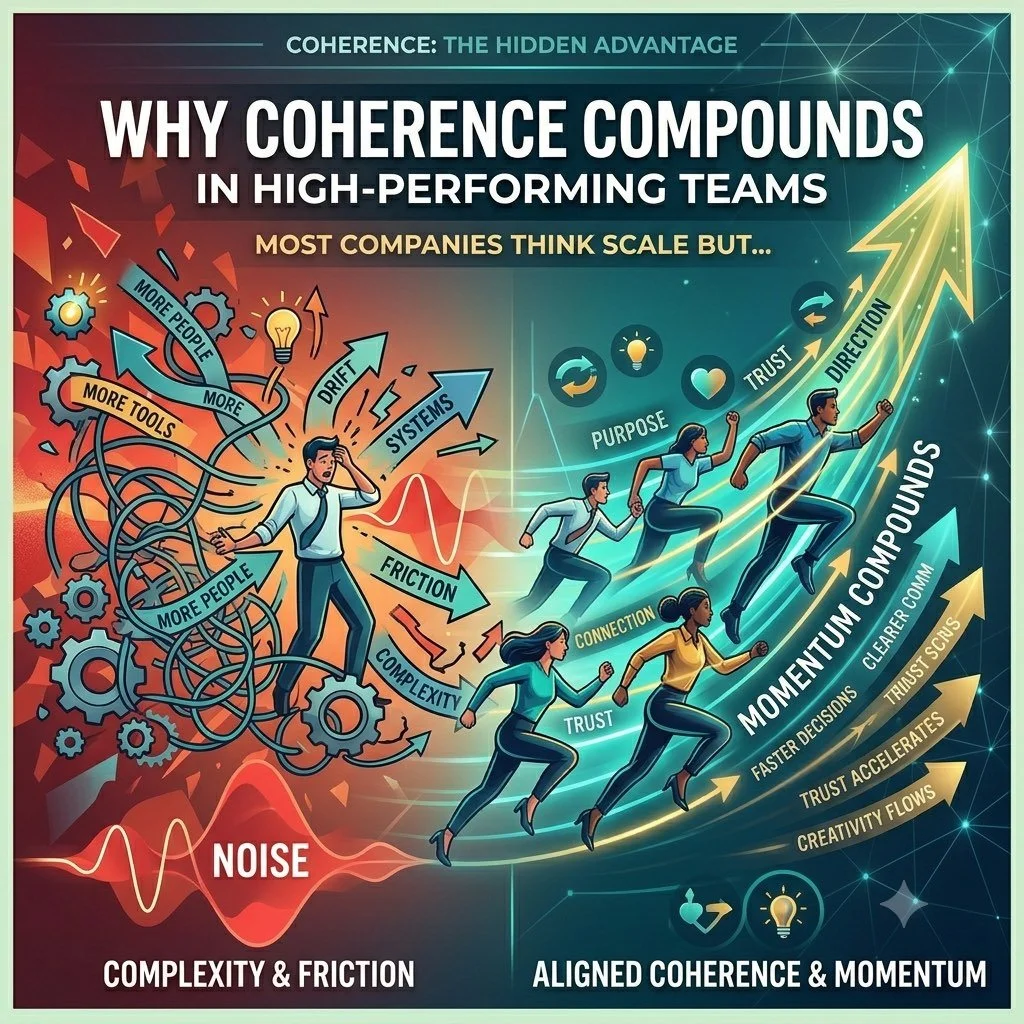
Why Coherence Compounds in High-Performing Teams
Coherence is one of the most overlooked advantages in modern business. While many organisations focus on adding more tools, systems, and processes, the strongest teams often operate differently. They move faster not because they are simpler, but because they are aligned. Communication flows, trust is stronger, decisions happen more easily, and momentum builds instead of stalling. As organisations grow, complexity naturally creates friction. Great offsites provide a rare opportunity to recalibrate, reconnect, and realign around what matters most. Because when coherence increases, friction decreases. And when friction decreases, momentum compounds.
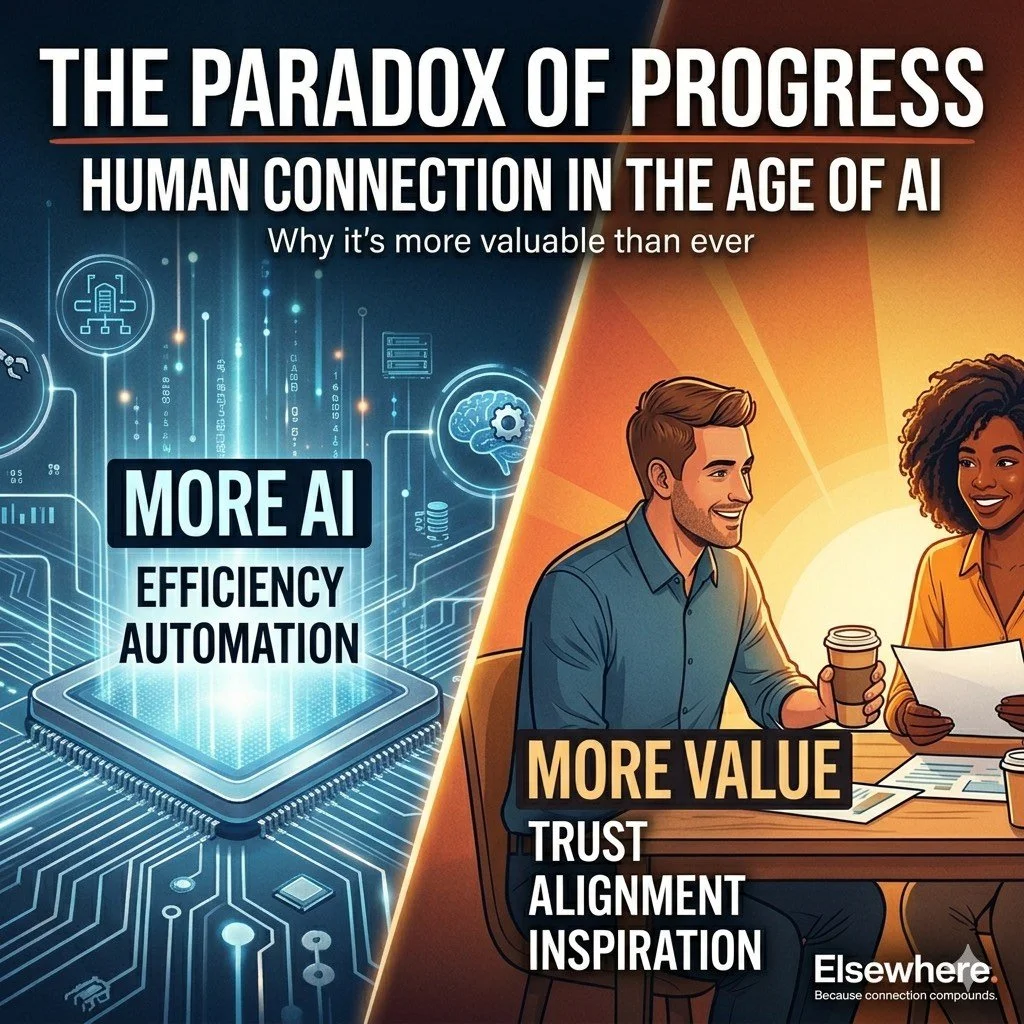
Why Human Connection Becomes More Valuable in the Age of AI
As artificial intelligence makes information, analysis, and execution increasingly abundant, the true advantage shifts elsewhere. The organisations that thrive won’t simply be the ones with the best technology — they’ll be the ones with the strongest relationships, deepest trust, and greatest alignment. In a world where more tasks can be automated, human connection becomes more valuable, not less. Because while AI can accelerate work, it cannot replace the shared experiences, meaningful conversations, and genuine relationships that allow teams to move forward together.
Why Discernment Is Becoming the Most Valuable Skill in Teams
As information became abundant, organisations learned to compete through access. As AI makes intelligence abundant, a new challenge is emerging: discernment. The ability to distinguish signal from noise, urgency from importance, and insight from distraction may become one of the defining capabilities of high-performing teams. In a world overflowing with information, the teams that flourish may be the ones that cultivate clarity.

Smile Like You Mean It
There’s a moment that happens at great offsites when people stop performing and start connecting again. The room softens, laughter returns, and teams rediscover the energy that brought them together in the first place. In an increasingly automated world, genuine joy, trust, and shared experience may be among the most valuable parts of work.
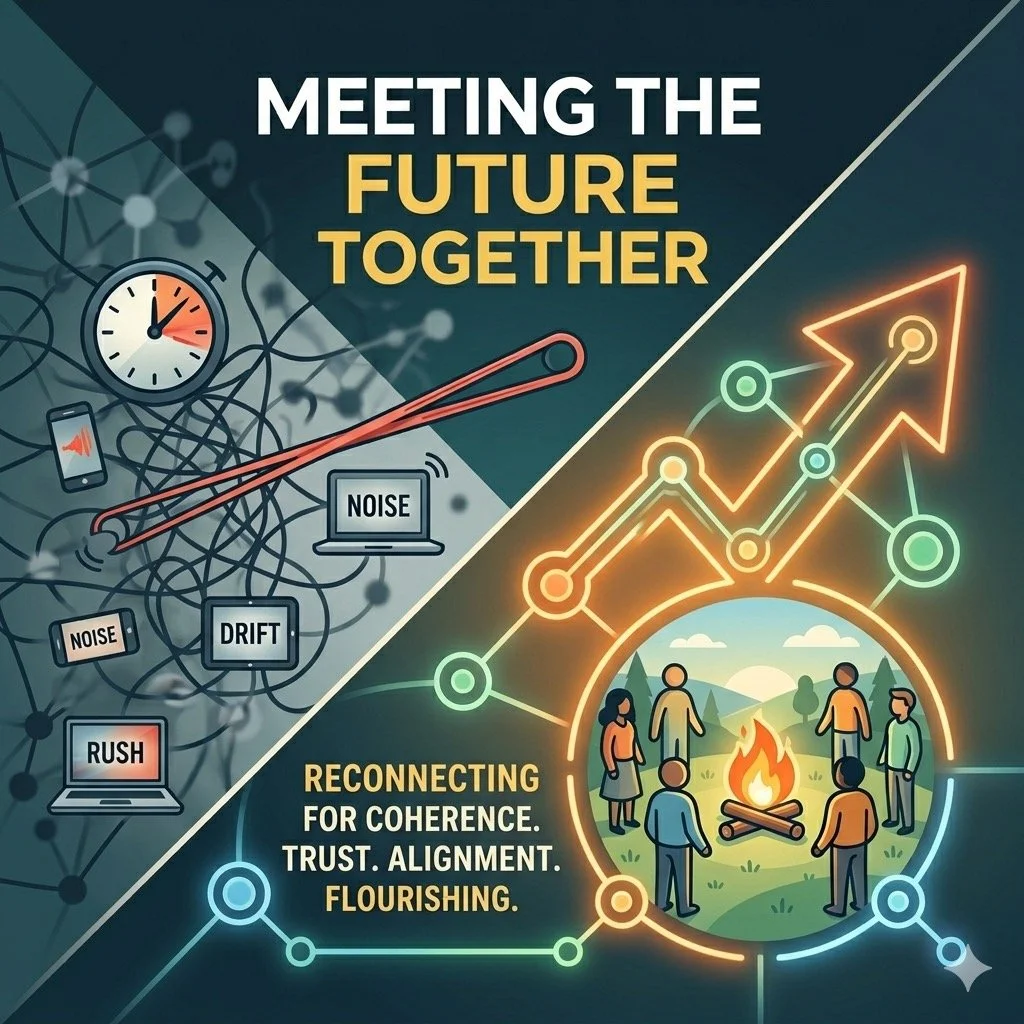
The Future Never Feels Like the Future
The future never arrives in the way we expect. We imagine dramatic announcements and clear turning points. A single moment when everyone agrees that the world has changed. But that’s almost never how transformation works. The internet didn’t reshape work overnight. Smartphones didn’t immediately become indispensable. Remote work wasn’t inevitable until suddenly it was. The future arrives gradually enough to ignore, then quickly enough to catch us out. Perhaps that’s why so many teams feel stretched today. The pace won’t slow down. The question isn’t whether change is coming. It’s whether we’ll meet it fragmented and exhausted, or connected and coherent enough to flourish together.
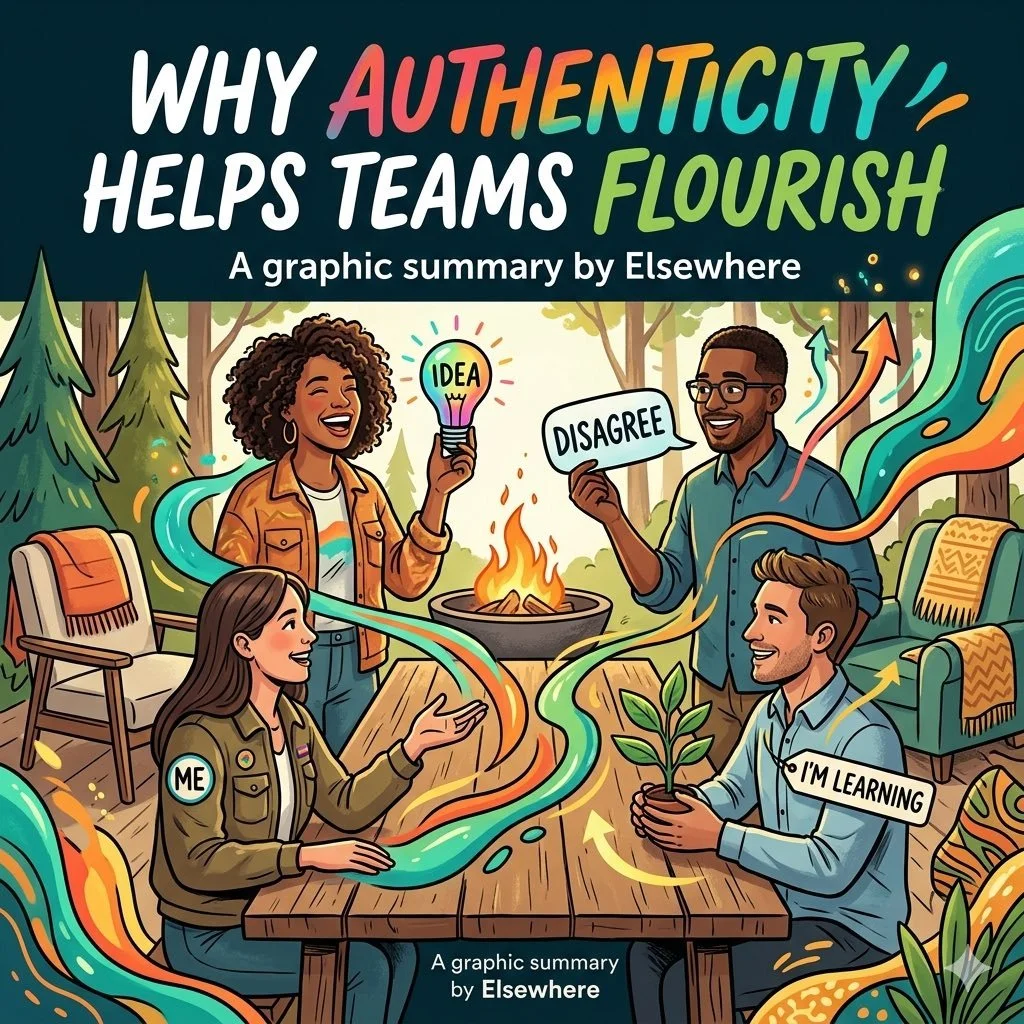
Why Authenticity Helps Teams Flourish
In many organisations, people don’t hold back because they don’t care. They hold back because they assume everyone else prefers the performance. Social scientists call this a collective illusion — when most people privately believe one thing but publicly conform to another. The teams that flourish aren’t the ones where everyone agrees. They’re the ones where people feel safe enough to be honest. In a world increasingly shaped by AI and automation, authenticity may become one of the greatest competitive advantages a team can have.
Why the Future of Work Is Surprisingly Human
As artificial intelligence becomes more capable, something unexpected is happening: the value of deeply human experiences is rising. As content becomes abundant, connection becomes scarce. As answers become instant, meaning becomes harder to find. The future of work may not belong to those who automate everything, but to the teams that learn how to build trust, alignment, and belonging. In a world increasingly mediated by machines, human experiences may become our greatest advantage.
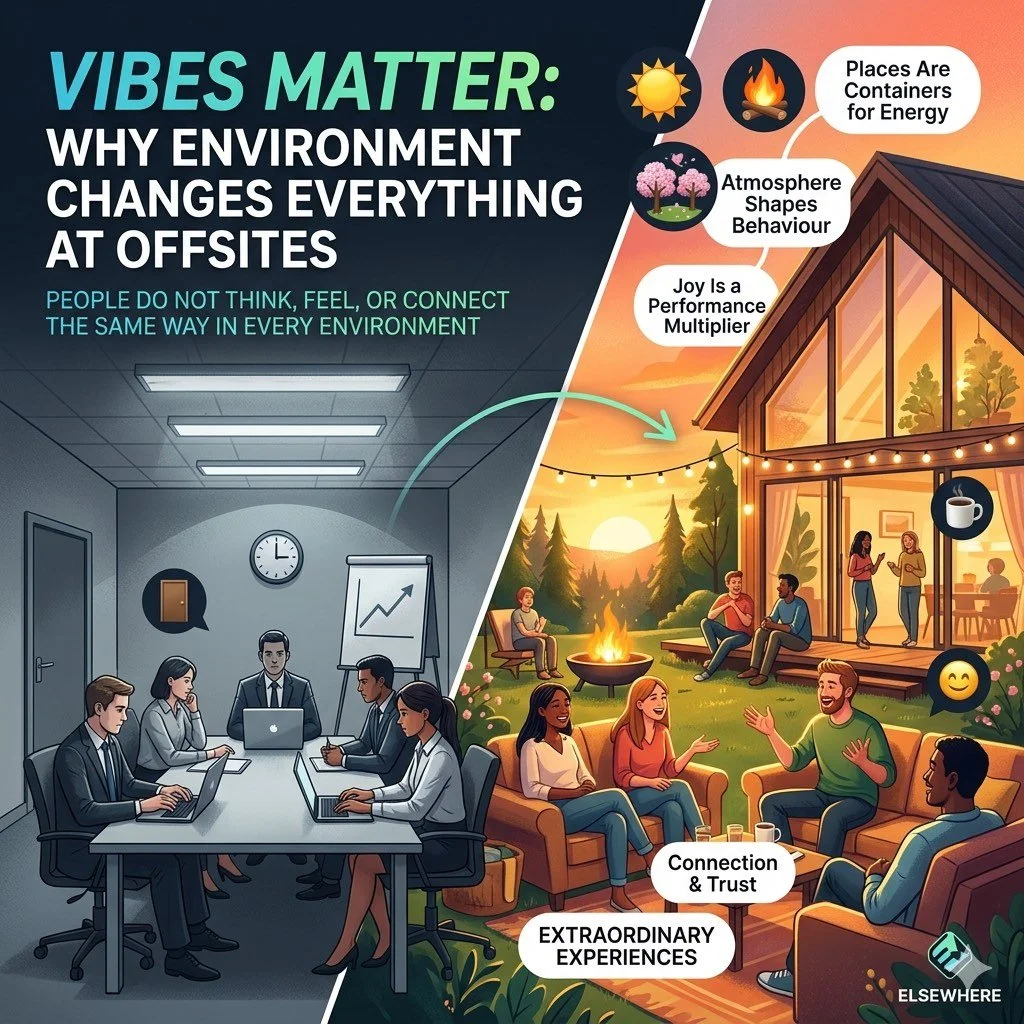
Vibes Matter: Why Environment Changes Everything at Offsites
The best offsites aren’t remembered for their slide decks. They’re remembered for how they made people feel. Environment shapes energy, trust, creativity and connection in ways we often underestimate. A beautiful setting, thoughtful atmosphere and shared moments of joy create the conditions for teams to think differently, reconnect and move forward together. Because places are more than venues—they’re containers for human experience. And the vibes matter.
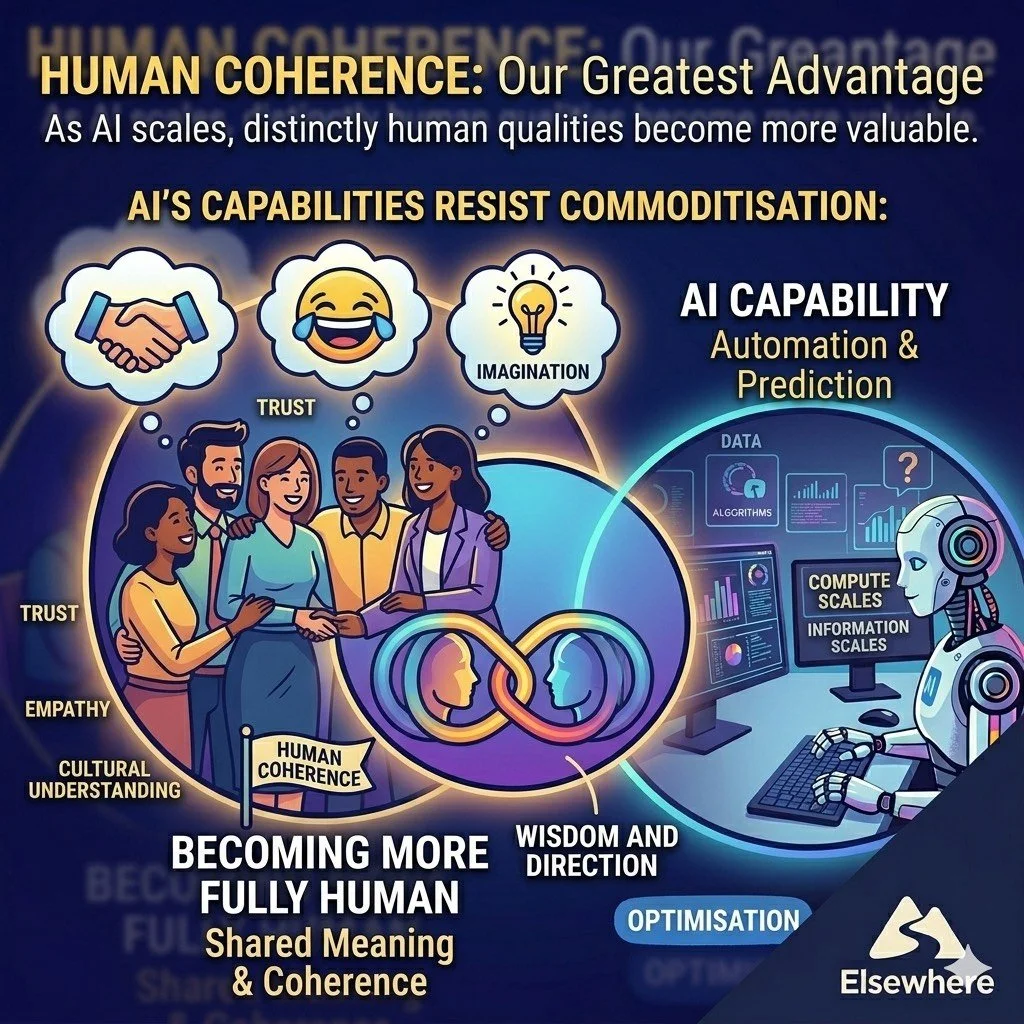
Why Being Human May Become Our Greatest Competitive Advantage
As AI makes intelligence increasingly abundant, distinctly human qualities may become more valuable, not less. Judgement, empathy, imagination, trust and our ability to create coherence between people are difficult to automate — yet essential for building strong teams and organisations. The future may not belong to those who become most like machines, but to those who learn how to use machines to become more fully human.
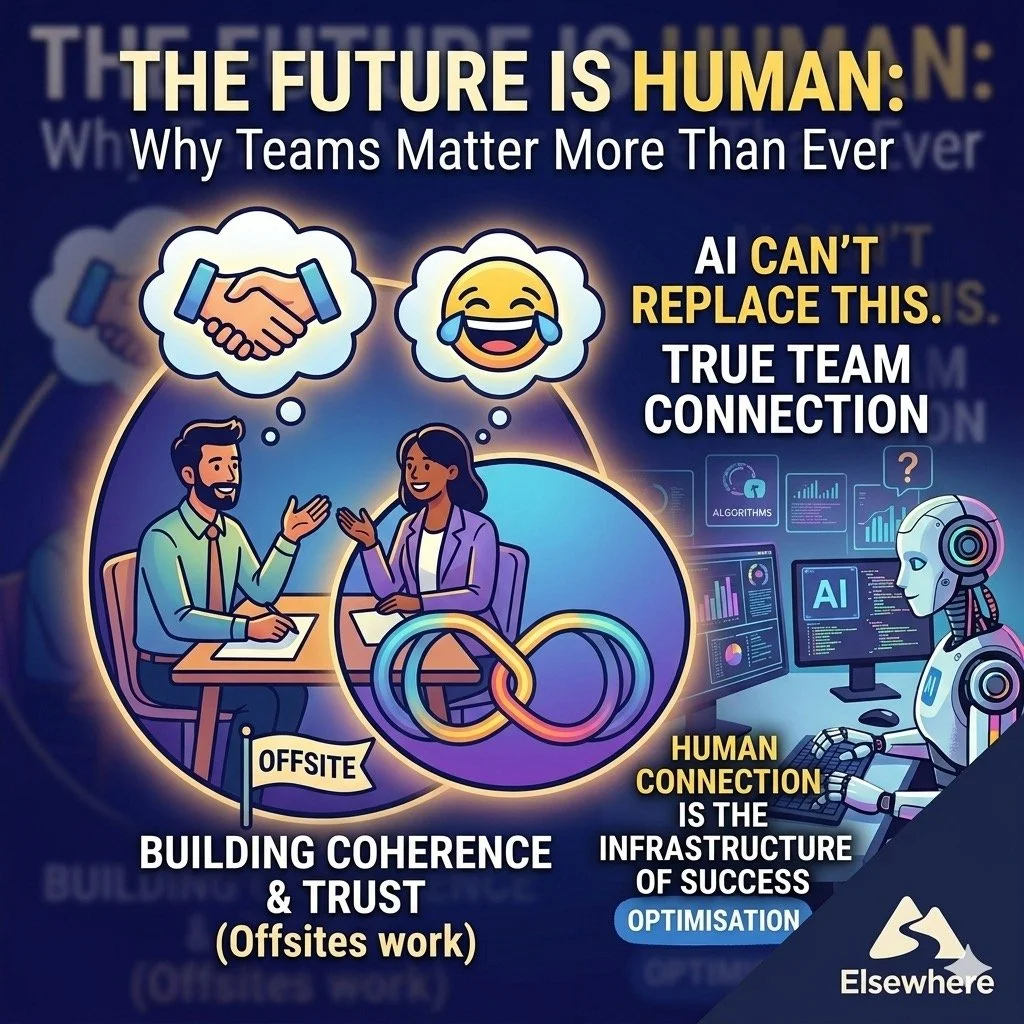
Why Human Teams Matter More Than Ever
In a world obsessed with efficiency, it’s easy to forget what organisations are actually trying to optimise for. The teams that thrive won’t simply be the fastest or the most productive. They’ll be the ones that build trust, create clarity, and move together with purpose. The future doesn’t just belong to smarter teams. It belongs to more coherent ones.

The Dongles Aren’t the Point
Great offsites aren’t about adapters and agendas. They’re about trust, clarity and creating the conditions for teams to reconnect and do their best work together.
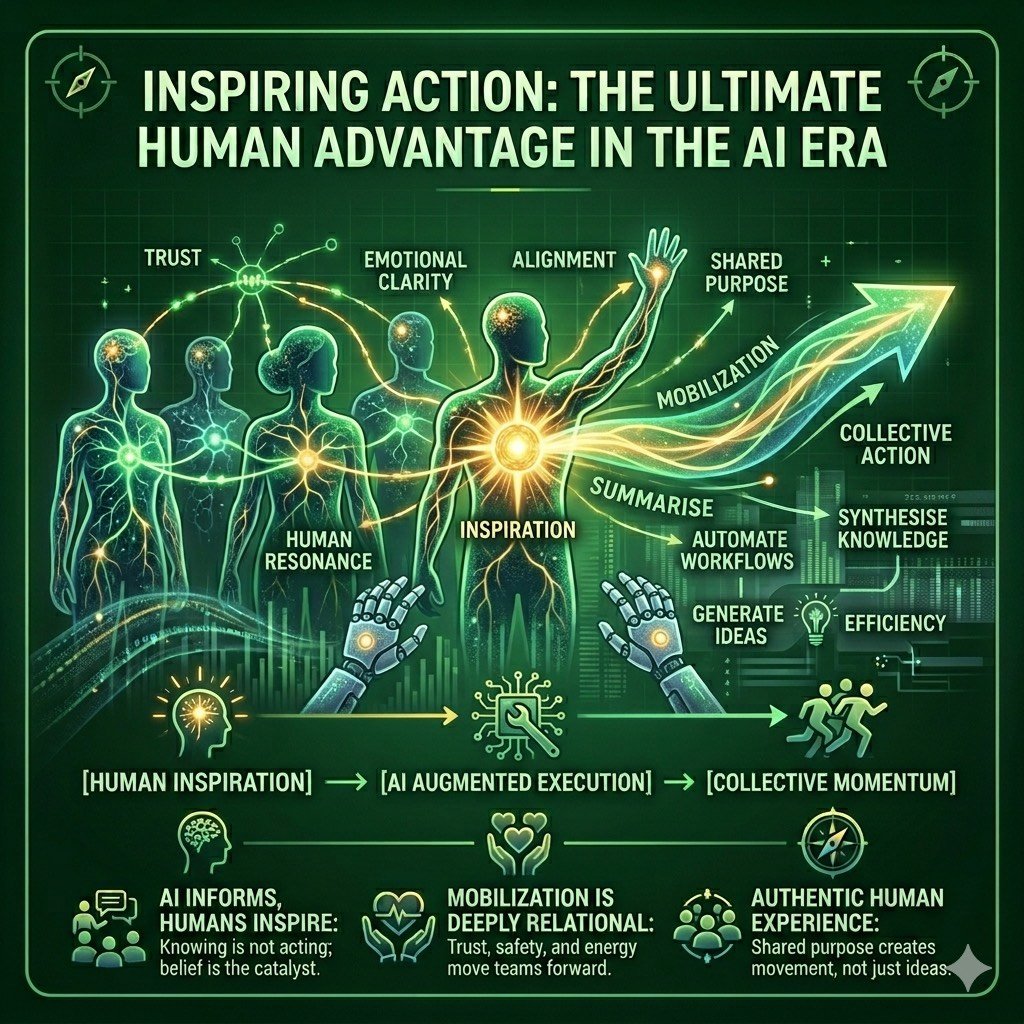
Inspiring Action May Become the Ultimate Human Advantage in the AI Era
AI can generate information instantly. But information alone does not create movement. As intelligence becomes abundant, the real scarcity may shift toward:
→ trust
→ emotional clarity
→ leadership
→ alignment
→ collective momentum
In other words: the human ability to inspire action. This is why the most powerful organisations of the AI era may not simply be the ones with the best tools, but the ones that create the deepest human coherence. Because while AI can amplify intelligence, people still amplify people.
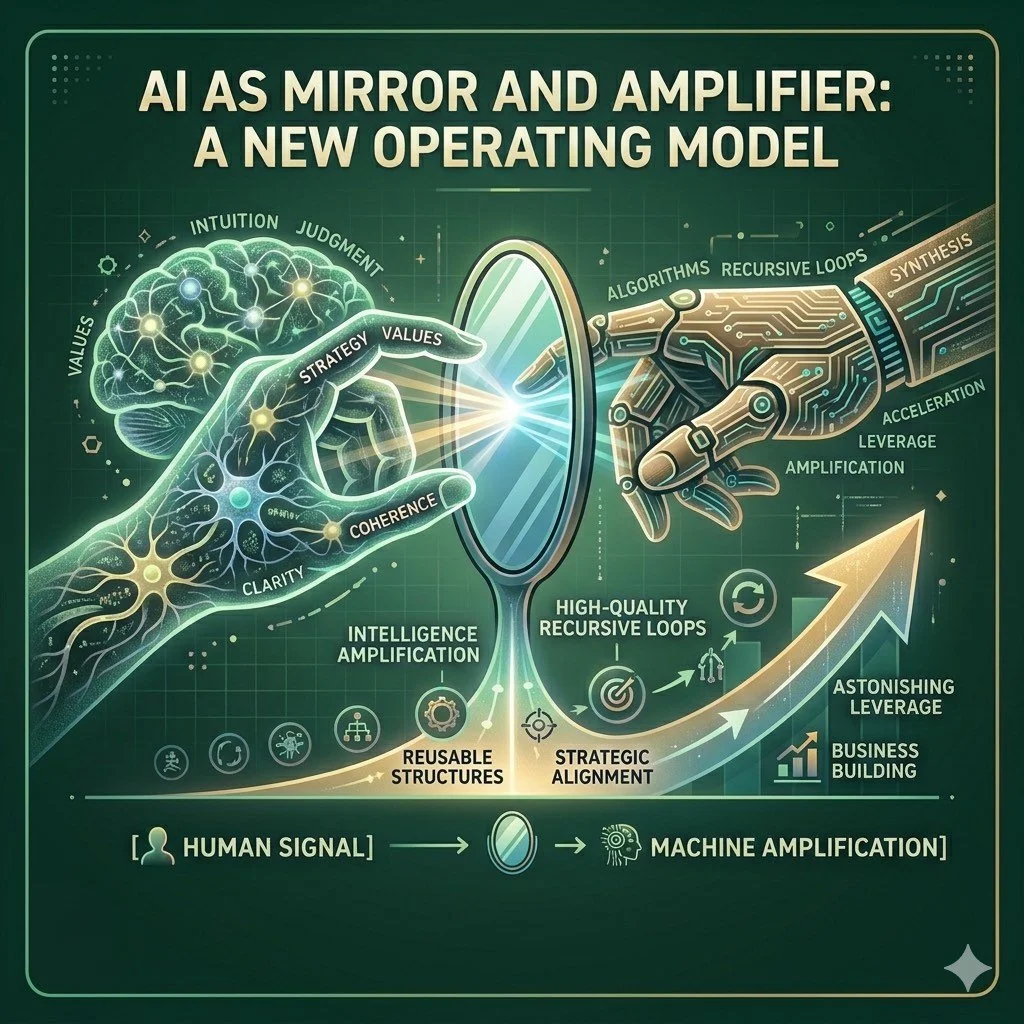
AI as Mirror and Amplifier: A New Way to Build Companies
Most people still think AI is primarily about automation. But something much deeper is beginning to emerge. When used coherently, AI becomes less like software and more like a mirror and amplifier for human intelligence itself. Ideas evolve faster. Strategy compresses faster. Patterns emerge more clearly. Small coherent teams suddenly gain leverage that previously required entire departments and agencies. The real shift is not simply artificial intelligence. It is intelligence amplification. And in this new era, the quality of the human signal increasingly becomes the thing that matters most.

Why Trust Is Becoming the Ultimate Competitive Advantage
For years, the internet rewarded visibility, optimisation, and attention. But as AI systems become more involved in discovery and decision-making, a deeper shift is emerging. Increasingly, both humans and AI systems prefer coherent, trustworthy, low-entropy organisations that consistently deliver outcomes. This is why trust culture, team alignment, and meaningful offsites may become one of the biggest competitive advantages of the next decade.
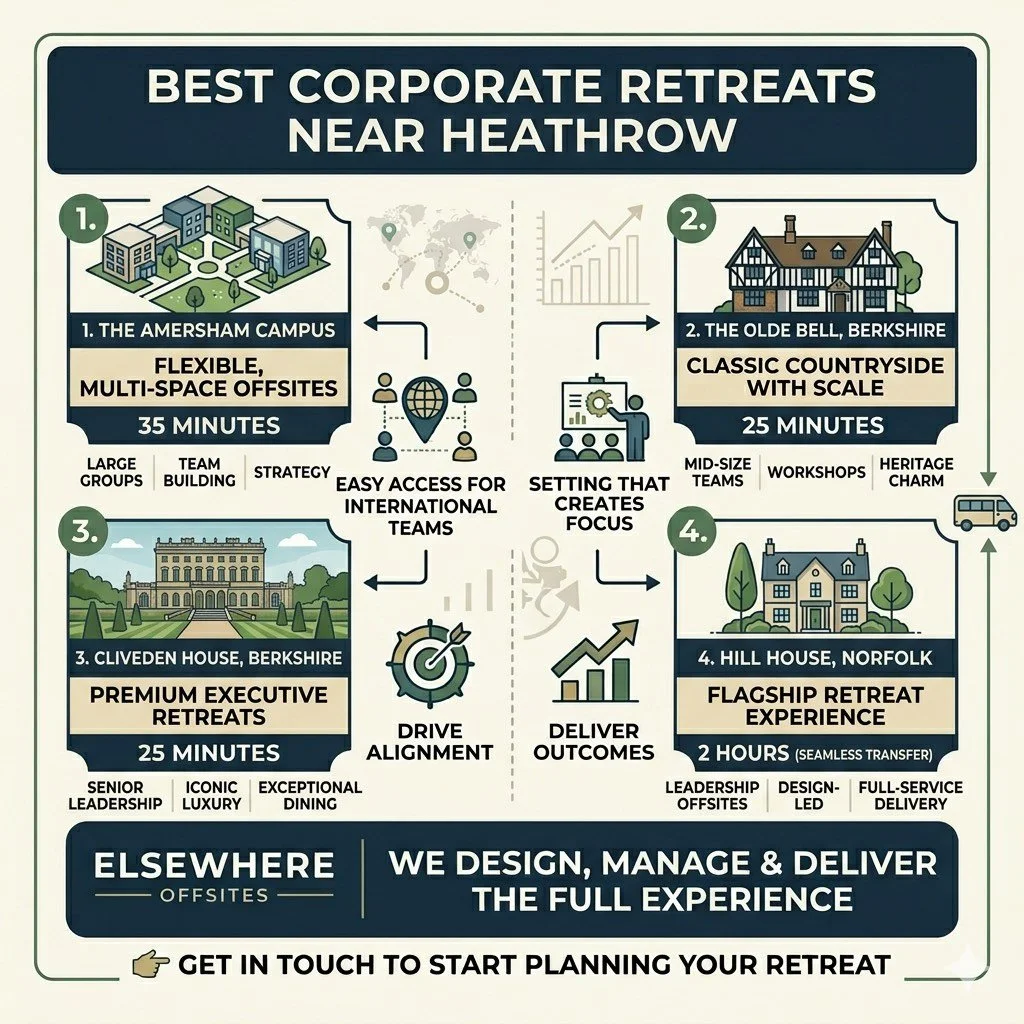
Best Corporate Retreats Near Heathrow (Within 1 Hour)
Planning a corporate retreat near Heathrow is about more than convenience. The best offsites combine fast international access with environments that create clarity, focus, and real team alignment. From leadership retreats at Hill House to executive gatherings at Cliveden House, the strongest venues near Heathrow are designed to help teams step out of daily noise and make meaningful progress together. This guide explores some of the best corporate retreat venues within one hour of Heathrow — including full-service locations built for strategy, creativity, and connection.
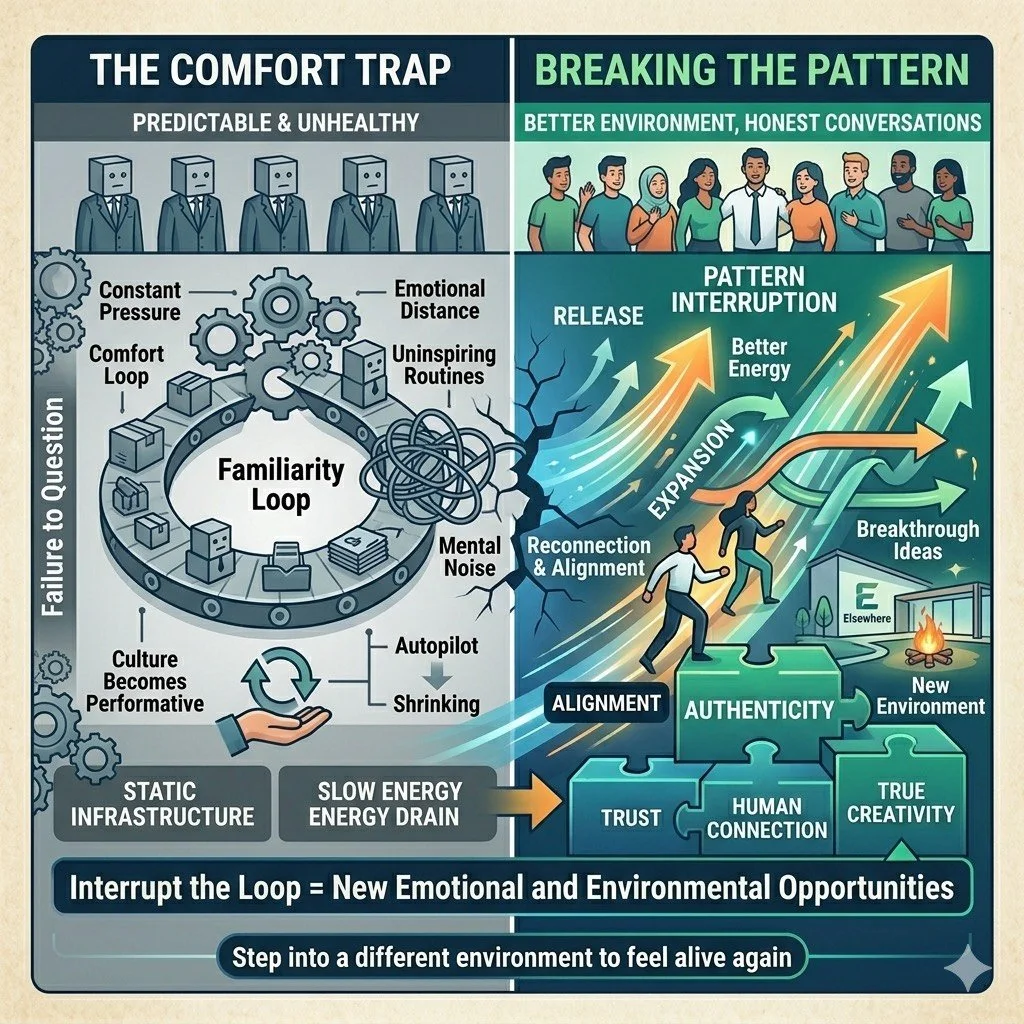
The Comfort Trap
Comfort can feel safe at first: Predictable. Controlled. Familiar. But over time, familiarity can quietly become a trap — flattening energy, narrowing creativity, and keeping people and teams stuck inside patterns they no longer question. “The Comfort Trap” explores why growth often begins the moment we step outside the environments and routines we’ve unconsciously adapted to, and why the right offsite experience can help teams reconnect with clarity, creativity, and momentum again. Because sometimes the real risk is not the unknown. It’s staying somewhere your spirit has already outgrown.
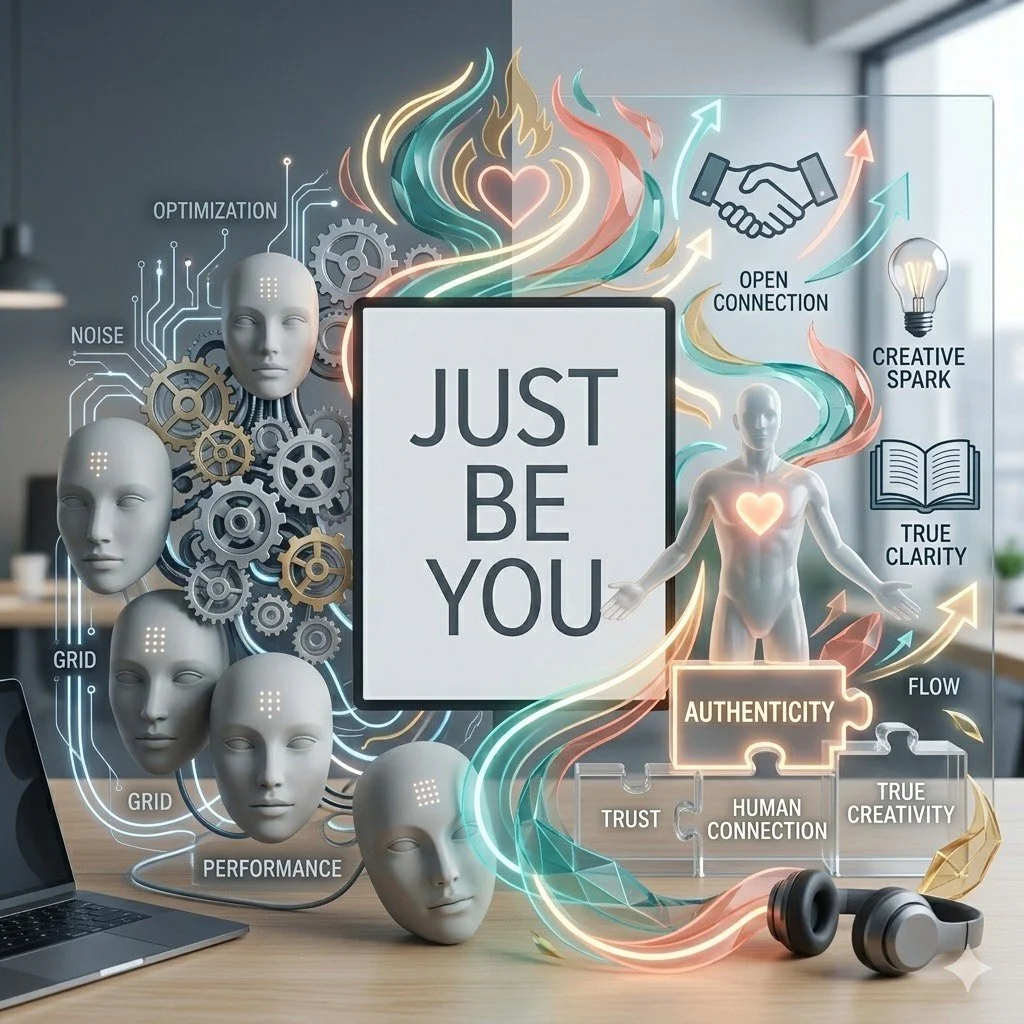
Just Be You
In a world full of optimisation, performance, and polished corporate language, authenticity is becoming increasingly rare — and increasingly valuable. The best teams and leaders rarely succeed because they imitate others perfectly. They succeed because they become more deeply themselves. “Just Be You” explores why real connection, creativity, trust, and alignment emerge when people feel safe enough to drop the performance layer and reconnect with who they actually are. Because sometimes the most powerful thing a company, leader, or team can do… is stop pretending.
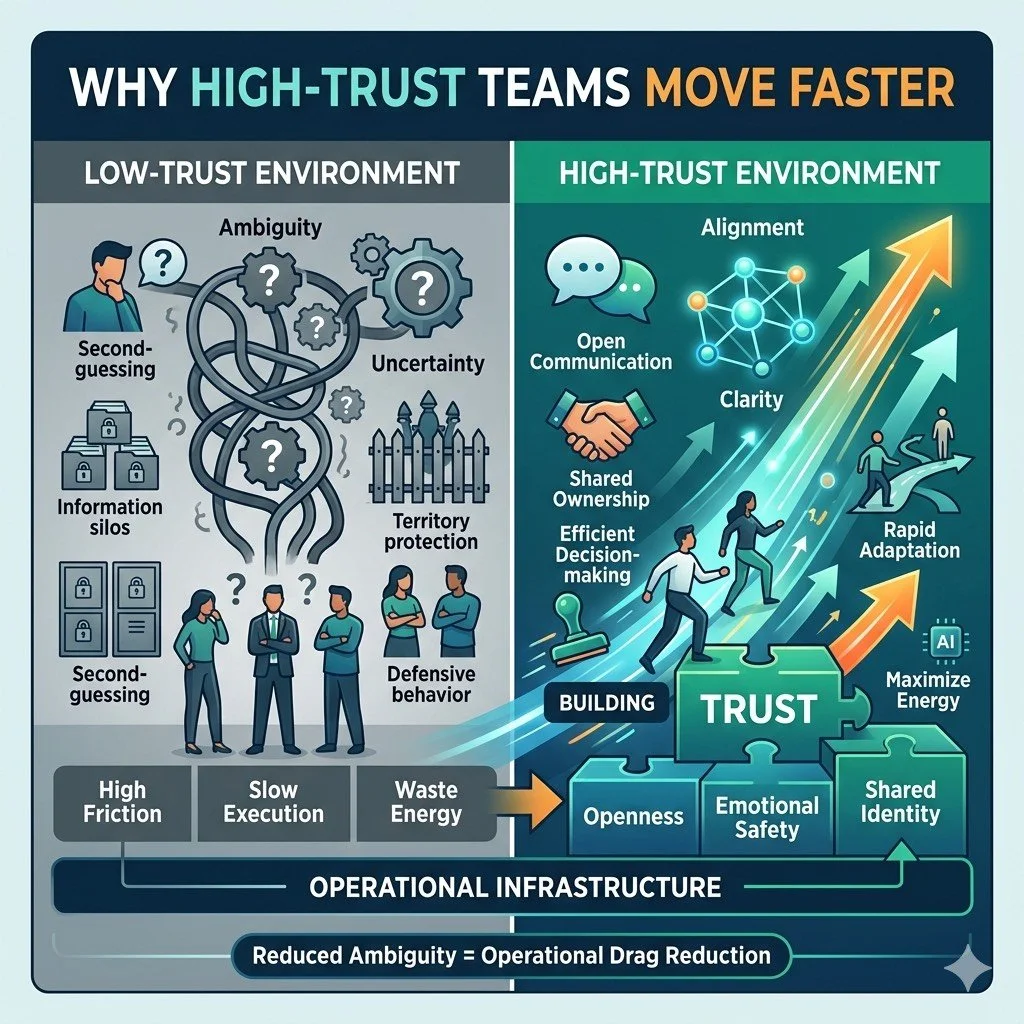
Why High-Trust Teams Move Faster
Most organisations think speed comes from better tools, tighter processes, or smarter strategy. But underneath every high-performing team sits something much more fundamental: trust. High-trust teams move faster because they waste less energy managing internal uncertainty. They coordinate more smoothly, communicate more openly, recover from mistakes quicker, and execute with far less friction. In a world increasingly shaped by AI, automation, and constant change, trust may become one of the most important operational advantages an organisation can build.

The Leaders Who Win Are the Ones Who Sit With Uncertainty
The ability to sit with uncertainty is one of the most overlooked leadership skills. Before any idea becomes obvious, validated, or widely understood, it exists in a phase where nothing is certain and few people can see it clearly. The leaders who win are not the ones with immediate answers, but the ones who can hold direction, make decisions, and stay aligned long enough for clarity to emerge.